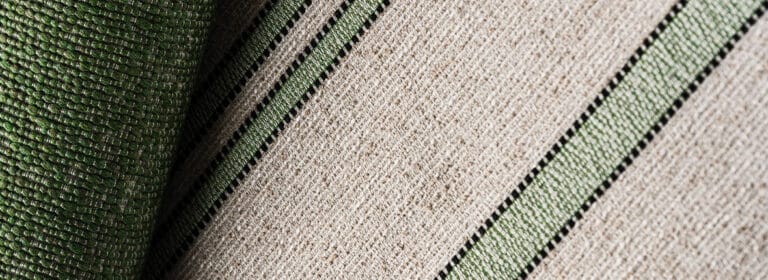
Sunbrella Completes Its Transition To PFAS-Free Fabrics
All Sunbrella fabrics are now manufactured without PFAS, ahead of the European PFHxA restriction that takes effect in October 2027.


Market
Hometech runs from mattress ticking, upholstery and carpet to curtains, filters inside appliances and cleaning cloths. Flame retardancy, abrasion resistance, stain release and comfort are the properties that count, and recycled and bio-based fibres are moving into the mainstream faster here than in most other textile markets.
Latest in this market
All Sunbrella fabrics are now manufactured without PFAS, ahead of the European PFHxA restriction that takes effect in October 2027.
What this market covers
7 topics explained in the questions at the bottom of this page. Read them
Ask the Expert
Engineers and product specialists who answer technical questions from readers. The answer comes back to you by e-mail; when we publish it, other readers benefit too.
No field expert for this market yet — your question still reaches our editors.
Market & Technology Focus
Every Thursday edition takes one market or technology in depth. These are the editions on this market — read them online or get the next one by e-mail.
Join 7,000+ product developers, technologists and technical buyers. Free, and you pick the editions.
"*" indicates required fields
What this market covers
Examples of home textiles include a diverse range of products that blend functionality with comfort and aesthetics. These encompass items like smart curtains that adjust based on sunlight intensity, thermal insulation textiles that regulate indoor temperatures, moisture-wicking bed linens for enhanced sleep comfort, antimicrobial-treated towels and upholstery for improved hygiene, stain-resistant tablecloths for easy maintenance, sound-absorbing wall panels, UV-protective window coverings, and energy-efficient textiles that reduce heat transfer. These innovative textiles are designed to elevate the quality of life within homes while seamlessly integrating into various living spaces, from bedrooms and bathrooms to living rooms and outdoor areas.
Home textiles boast a range of vital properties that enhance both functionality and aesthetics within living spaces. These properties include exceptional thermal insulation, ensuring optimal temperature regulation and energy efficiency. Moisture-wicking abilities provide enhanced comfort by managing humidity. Antimicrobial and stain-resistant treatments promote hygiene and easy maintenance. Smart textiles incorporate technology, enabling automation and customization of elements like lighting and privacy. UV-protective textiles guard against harmful rays, while sound-absorbing materials improve acoustics. Durability and longevity are essential for sustainability. Additionally, the tactile appeal and visual design of home textiles contribute to the overall ambiance and aesthetic appeal of a home, making them integral to modern interior design and enhancing the everyday living experience.
Innovations in home textiles have ushered in a new era of functional and aesthetic possibilities. Smart textiles now integrate sensors and automation, enabling curtains to adjust based on light levels and fabrics to interact with devices. Nanotechnology has led to antimicrobial textiles that promote cleaner living environments. Sustainable materials like bamboo and organic cotton are gaining prominence, contributing to eco-friendly home decor. 3D weaving techniques create unique textures and designs, while photovoltaic textiles generate renewable energy. Responsive fabrics change color or texture in response to environmental factors. Integration of biodegradable materials supports eco-conscious living. These innovations reflect the convergence of technology, sustainability, and design, shaping the future of how we interact with and outfit our living spaces.
Flat wovens, jacquards, chenilles and warp knits each bring a different balance of abrasion resistance, drape and price. Martindale rub count, light fastness and flame retardancy are the numbers a buyer actually checks before a fabric goes into a contract project. More in Woven Fabrics and Knitted Fabrics.
Nonwovens sit inside mattresses and furniture as wadding and fire barrier, in vacuum cleaner and appliance filters, and in wipes and cleaning cloths. They are also the base for most iron-on and self-adhesive interior products. More in Nonwoven Fabrics.
Coatings and backings add stain release, water repellency, flame retardancy and dimensional stability, and they keep upholstery fabric from stretching over the frame. Blackout curtains and outdoor fabrics rely almost entirely on the coating for their function. More in Coated Textiles.
Recycled polyester, mechanically recycled cotton and bio-based polyamide are entering mainstream ranges, driven by retailer commitments rather than by price. Fibre traceability and blend purity decide whether the product can be recycled again at the end of its life. More in Fibers and Yarns.
Use the Manufacturers Directory A-Z, or open a supplier profile from the field experts listed on this page. Partner profiles carry direct contact details; other listings link to the company website.
Yes. Ask the Expert puts your question to a field expert active in Home Textiles. The answer comes back to you by e-mail; when we publish it, other readers benefit too.