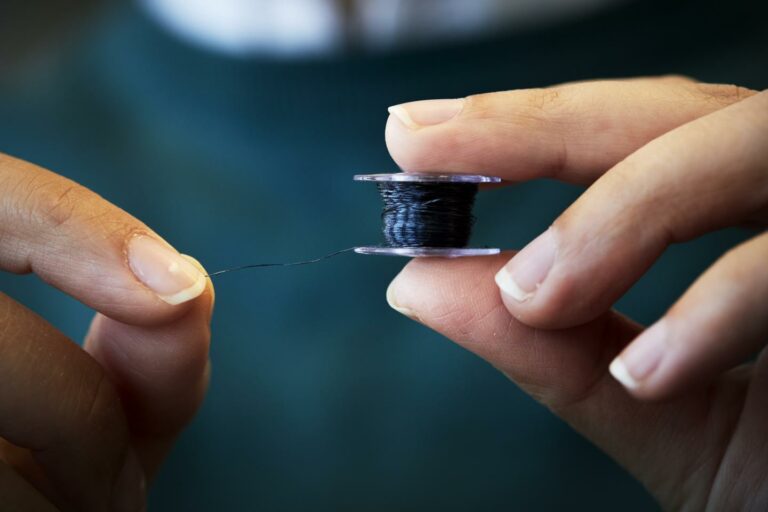
Research and development is where the next textile is decided, from eco-friendly fibres to smart and e-textiles. This zone covers institutes, pilot lines, test methods and the projects that move a material from laboratory to production.
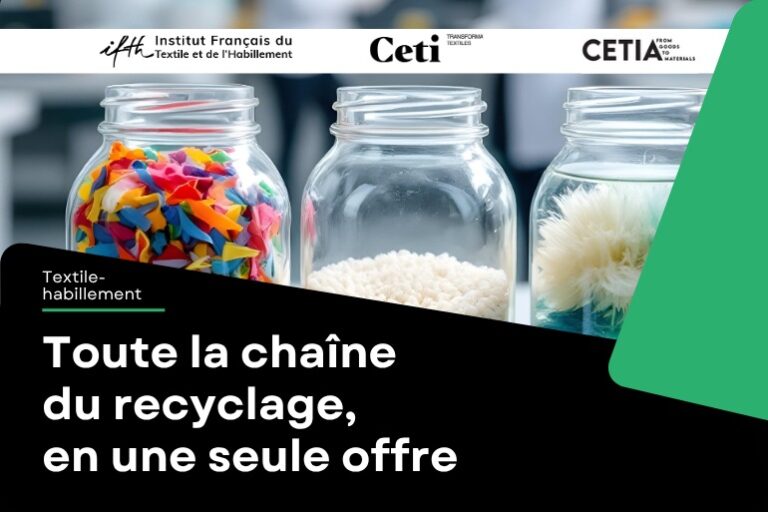
Because textile recycling challenges require a wide range of expertise, CETI, CETIA and IFTH have joined forces to provide a single entry point for companies seeking support with…
Research & Development: how it works, key numbers and troubleshooting
Fundamentals
From laboratory to pilot to line
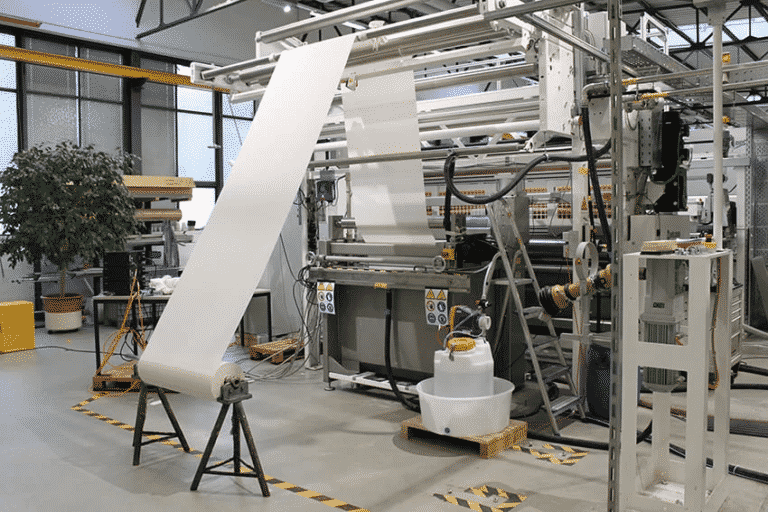
Most textile innovation dies between the beaker and the machine. A chemistry that works on a hand sample has to survive a pilot line, where speed, tension, temperature and residence time all appear at once, and then a production line, where cost and consistency appear as well. Institutes and pilot lines exist precisely to bridge that gap, and the projects that budget for the pilot stage are the ones that reach the market.
Sustainable fibres and circularity
The research pressure sits on three fronts: replacing fossil polymers with bio-based ones, recycling what exists, and designing products that can be taken apart at all. Mechanical recycling shortens fibres and loses quality; chemical recycling returns the polymer to monomer and costs energy; and neither works on a laminate of four materials. Mono-material design is the quiet part of the answer, and it is a design decision, not a research one.
Smart and electronic textiles
E-textiles put conductive yarns, printed circuits, sensors and sometimes power into a fabric. The physics works; the problems are at the joints, in the wash and in the supply chain. A connection between a rigid component and a flexible textile is a fatigue point, laundering is brutal, and the electronics industry and the textile industry have different tolerances, different lead times and different notions of a batch.
Testing and standards
A textile claim is only as good as the method behind it. Tensile, tear, abrasion, colour fastness, flammability, water resistance and breathability each have several standards that give different numbers, and a value without a method is not information. For protective textiles the standard is also the legal basis for the product, and the certification body, not the laboratory, is what the market accepts.
Funding and collaboration
Textile research runs largely on collaborative projects: national programmes, European frameworks, and consortia that pair an institute with a machine builder and a brand. That shapes what gets researched, because a project needs partners across the chain to be funded. It also means the results are often public, and a company that reads the project reports gets a lot of the benefit without carrying the cost.
Key parameters
Parameter
Typical range
Rule of thumb
Technology readiness level
TRL 1 to 3 laboratory, 4 to 6 pilot, 7 to 9 production
Most funding gaps sit between TRL 4 and 7; plan for that valley
Pilot line width
300 to 600 mm against 1,800 to 3,200 mm in production
Edge effects dominate at pilot width; do not extrapolate uniformity
Sample size for testing
5 specimens per direction as a minimum
Textiles are variable; a single specimen is an anecdote
Conditioning
20 degrees and 65 % relative humidity, 24 hours
Untested conditioning invalidates comparisons between laboratories
Wash cycles for durability
5, 20 or 50 depending on the claim
State the count and the method with every functional claim
Recycled content
Verified by mass balance or by physical traceability
The two are not the same claim; know which one you are buying
E-textile wash resistance
Target 20 to 50 domestic wash cycles
Test the connection, not the yarn; the joint fails first
Project duration
2 to 4 years for a collaborative project
Match the roadmap to that horizon, not to a quarterly plan
Troubleshooting
Symptom
Likely causes
What to do
Laboratory result does not reproduce on the pilot line
Residence time, tension and temperature profiles differ, or the hand sample was treated far longer
Match the time and temperature profile rather than the recipe, and instrument the pilot line before blaming the chemistry
Pilot result does not reproduce in production
Width, speed and edge effects, or a raw material lot that differs
Run a full-width trial early, and pin the raw material specification before scale-up rather than after
Two laboratories report different values
Different standard, different conditioning, or different specimen preparation
Agree the method, the conditioning and the number of specimens in writing before the round robin
E-textile fails in the wash
Connection between rigid component and textile fatigues, or encapsulation lets water in
Redesign the joint as a strain relief rather than a solder point, and test wash cycles from the first prototype
Recycled content cannot be verified downstream
Mass balance claim treated as physical content, or missing chain of custody
Decide which claim the market needs and buy the certification that supports it
Project delivers a report but no product
No production partner in the consortium, or no plan for the TRL 4 to 7 gap
Bring a machine builder and a converter into the consortium at the proposal stage
Certification takes longer than the development
Standard chosen late, or a design change after testing started
Identify the standard and the notified body at the design stage and freeze the design before certification testing
Engineers and product specialists who answer technical questions from readers. The answer comes back to you by e-mail; when we publish it, other readers benefit too.
No field expert for this zone yet — your question still reaches our editors.
Why do so many textile innovations stall after the laboratory?
Because a hand sample and a production line are different processes. On a line the treatment has seconds rather than minutes, the tension is real, the temperature is a profile rather than a set point, and the width introduces edge effects. The gap between technology readiness levels four and seven is where funding is thinnest and where most projects run out of money.
Mechanical or chemical recycling?
Mechanical is cheaper and available now, and it shortens fibres, so the output goes into lower value products each cycle. Chemical recycling returns the polymer to monomer and can produce virgin-quality material, at a much higher energy cost and with a limited number of plants. Both are defeated by blends and laminates, which is why mono-material design matters more than either technology.
What actually stops e-textiles reaching the market?
The joint between the rigid and the flexible. Conductive yarns work, printed circuits on textile work, and the sensors work; what fails is the connection to a battery or a chip, under flexing and in the wash. The other obstacle is commercial: the electronics and the textile chains have different volumes, lead times and margins, and the product has to satisfy both.
How do I compare test results from different suppliers?
By insisting on the method, the conditioning and the number of specimens alongside every number. Tear strength by Elmendorf and by trapezoid give different values for the same fabric; MVTR by three methods gives three answers. Textiles are also variable, so a single specimen result is an anecdote. Five per direction after standard conditioning is the minimum for a real comparison.
What does mass balance recycled content mean?
That the recycled feedstock entered the system somewhere and an equivalent amount of output is claimed as recycled, without the physical molecules necessarily being in your product. It is a legitimate accounting approach and it is not the same as physically traceable recycled content. Decide which one the market you sell into expects before buying the certificate.
Is it worth joining a collaborative research project?
If you can put someone in it who will be there for the duration, yes. The funding covers work you could not justify alone, and the consortium gives access to pilot equipment and to partners across the chain. The failure mode is a project with no production partner: it delivers a report, everyone learns something, and nothing reaches a line.
When should I involve the certification body?
At the design stage, not when testing starts. For protective and medical textiles the standard is the product specification in practice, and a design change after certification testing means starting again. Identifying the standard and the notified body early also tells you which tests will drive the design, which usually reorders the development plan.
What is the difference between this Technology Zone and the Equipment Guide?
The zone is the editorial side: news, case studies, videos, newsletter editions and field experts. The Equipment Guide is the directory side: equipment types and the manufacturers that build them. This page links to its Equipment Guide category and back.
How do I find a manufacturer of research & development equipment?
Open the Equipment Guide category for this zone, pick an equipment type and open a manufacturer profile. Partner profiles carry direct contact details; other listings link to the company website.
Can I ask a technical question before I buy?
Yes. Ask the Expert puts your question to a field expert in this zone. The answer comes back to you by e-mail; when we publish it, other readers benefit too.
Your company in this zone?
Do you manufacture technical textiles and want your company in a market? A basic listing is free.
To provide the best experiences, we use technologies like cookies to store and/or access device information. Consenting to these technologies will allow us to process data such as browsing behavior or unique IDs on this site. Not consenting or withdrawing consent, may adversely affect certain features and functions.
Functional
Always active
The technical storage or access is strictly necessary for the legitimate purpose of enabling the use of a specific service explicitly requested by the subscriber or user, or for the sole purpose of carrying out the transmission of a communication over an electronic communications network.
Preferences
The technical storage or access is necessary for the legitimate purpose of storing preferences that are not requested by the subscriber or user.
Statistics
The technical storage or access that is used exclusively for statistical purposes.The technical storage or access that is used exclusively for anonymous statistical purposes. Without a subpoena, voluntary compliance on the part of your Internet Service Provider, or additional records from a third party, information stored or retrieved for this purpose alone cannot usually be used to identify you.
Marketing
The technical storage or access is required to create user profiles to send advertising, or to track the user on a website or across several websites for similar marketing purposes.
Get compact market and technology updates twice a week — with editorial insights and key industry news delivered straight to your inbox. No spam, only practical insights for technical textile professionals.
Tuesday: Weekly E-Update (5-minute summary)
Thursday: Market/Technology Focus (in-depth case)
Independent editorial selection — no sales pitches