Industrial textiles do the work no one sees: filter media, conveyor and drive belts, hoses, ropes, insulation and reinforcement inside machines and buildings. Fibre choice, weave, coating and finish decide how long a part survives heat, abrasion, chemicals and load, and that is where most of the innovation happens.
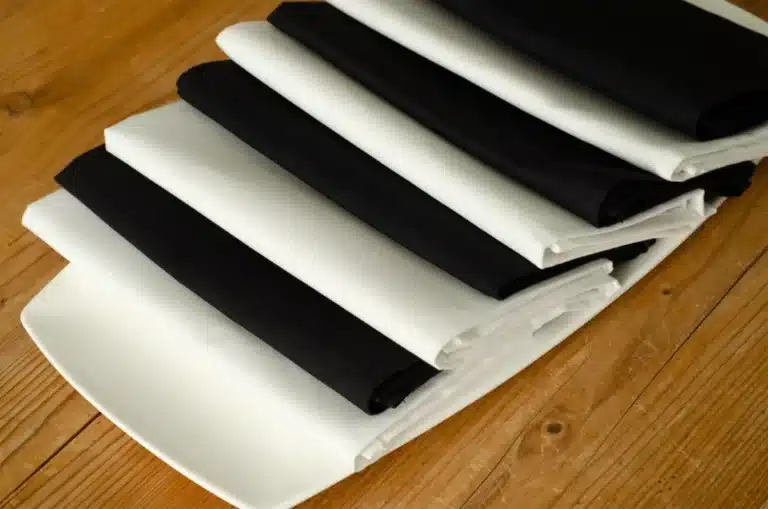
Milliken & Company and Venus Group have collaborated to introduce Milliken™ Passport, a U.S.-finished table linen fabric offered through Venus for industrial laundries and linen rental providers, and…
Independent editorial selection — no sales pitches. Sponsored items are marked as such.Submit your news
What this market covers
Key questions about Industrial textiles
9 topics explained in the questions at the bottom of this page. Read them
Ask the Expert
Ask a industrial textiles expert — free
Engineers and product specialists who answer technical questions from readers. The answer comes back to you by e-mail; when we publish it, other readers benefit too.
Every Thursday edition takes one market or technology in depth. These are the editions on this market — read them online or get the next one by e-mail.
Subscribe to our E-newsletters
Join 7,000+ product developers, technologists and technical buyers. Free, and you pick the editions.
Conveyor belts, a cornerstone of modern industries, heavily rely on industrial textiles for their efficient and reliable functioning. These textiles are strategically layered within the belt structure to provide essential properties like strength, flexibility, and durability. High-tensile fabrics, often made from materials like polyester or nylon, form the core reinforcement of the belt. This reinforcement imparts the necessary tensile strength to handle the load and motion of materials being transported.
The outer layers of the conveyor belt are typically composed of rubber or other materials that provide grip and protection against wear and tear. This combination of textile reinforcement and outer layers ensures that conveyor belts can withstand heavy loads, continuous operation, and harsh environments. Moreover, industrial textiles used in conveyor belts must meet stringent quality standards to ensure safety, reliability, and operational efficiency across various industries, including manufacturing, mining, agriculture, and logistics.
Lifting
Industrial textiles play a crucial role in lifting applications, providing the strength, flexibility, and reliability required for safe and efficient operations. Textile ropes, woven from synthetic fibers like nylon, polyester, or polypropylene, are instrumental in lifting equipment such as cranes and hoists. These ropes offer impressive strength-to-weight ratios, enabling them to support heavy loads while remaining lightweight and maneuverable.
The flexibility of textile ropes allows them to navigate complex paths and provide even load distribution, reducing the risk of stress concentration. Their synthetic composition offers resistance to moisture, UV radiation, and chemical exposure, ensuring longevity and consistent performance even in challenging environments. Textile ropes are a versatile and cost-effective alternative to traditional materials, making them indispensable in industries ranging from construction and maritime to entertainment and rescue operations. The use of industrial textiles for lifting applications underscores their adaptability and reliability in critical industrial processes.
Filtration
Industrial textiles play a vital role in filtration processes, where their unique properties contribute to efficient separation of solids from liquids or gases. Filter fabrics, often constructed from specialized materials like polyester, polypropylene, or nylon, form the foundation of filtration systems. These textiles have fine mesh structures that effectively capture particles while allowing fluids or gases to pass through.
Industrial textiles used in filtration are designed to withstand various pressures, temperatures, and chemical exposures. They are tailored to specific applications, whether in chemical processing, wastewater treatment, or air purification. These textiles are chosen for their durability, resistance to abrasion, and ability to maintain filtration efficiency over extended periods.
Whether in manufacturing, environmental protection, or pharmaceuticals, industrial textiles for filtration ensure that processes are optimized for maximum efficiency and quality. Their role in capturing contaminants and maintaining the purity of fluids or gases underscores their importance in safeguarding industrial processes and environmental standards.
Chemical industry
Industrial textiles are integral to the chemical industry due to their exceptional properties that align with the sector's rigorous demands. In chemical plants, where exposure to corrosive chemicals and hazardous environments is common, textiles serve as crucial components for safety and efficiency. Chemical-resistant textiles, often coated or treated with specialized compounds, create protective clothing that shields workers from potential harm.
Furthermore, industrial textiles find application in filtration processes within the chemical industry. Filter fabrics, designed with fine mesh structures, effectively separate solids from liquids or gases, ensuring product quality and preventing contamination. Their durability and resistance to chemical exposure make them indispensable for maintaining the integrity of
Electrical industry
Industrial textiles play a pivotal role in the electrical industry due to their diverse properties that cater to the sector's specific requirements. These textiles offer exceptional electrical insulation, safeguarding workers and equipment from electrical hazards. Insulating textiles, often impregnated with specialized compounds, create protective barriers that prevent electrical current from causing harm.
Moreover, industrial textiles contribute to the production of electrical cables and wiring. They provide mechanical strength, flexibility, and durability, enhancing the reliability of these critical components. Fire-resistant textiles are vital for flame-retardant clothing worn by electrical maintenance personnel, adding an extra layer of protection in hazardous scenarios.
The adaptability and specialized characteristics of industrial textiles make them invaluable in the electrical industry, addressing safety concerns, enhancing the performance of equipment, and ensuring compliance with safety regulations. Their contribution spans insulation, reinforcement, and protection, supporting the smooth and secure functioning of electrical operations.
Which fabric constructions are used in industrial textiles?
Heavy woven fabrics carry tensile load in belts, hoses and filter cloths, while knitted and braided structures give flexibility where a part has to bend or stretch. Weave type, yarn count and finish decide dimensional stability, abrasion life and how the fabric behaves under repeated load. More in Woven Fabrics and Knitted Fabrics.
Why are industrial textiles coated?
A coating turns a fabric into a barrier or a wear surface: PVC and PU for conveyor covers and tarpaulins, PTFE for high temperature and release, rubber for hoses and expansion joints. The bond between coating and substrate usually decides service life, not the coating itself. More in Coated Textiles.
Where are composites used in industry?
Fibre reinforced composites replace metal where weight, corrosion or fatigue are the problem: tanks, pipes, pressure vessels, machine covers and structural parts. Glass, carbon and aramid reinforcement combined with the right resin give stiffness at a fraction of the mass. More in Composites.
What are flexible connections used for?
Expansion joints, compensators and flexible hose connections absorb movement, vibration and thermal expansion between rigid parts of an installation. Fabric based versions handle large displacements and high temperature where a metal bellows would fatigue. More in Flexible Connections.
How do I find suppliers active in this market?
Use the Manufacturers Directory A-Z, or open a supplier profile from the field experts listed on this page. Partner profiles carry direct contact details; other listings link to the company website.
Can I ask a technical question before I buy?
Yes. Ask the Expert puts your question to a field expert active in Industrial textiles. The answer comes back to you by e-mail; when we publish it, other readers benefit too.
Want to be the expert readers ask?
Field experts get a byline, a company profile and direct questions from readers. Partner packages add product visibility and a place in the Weekly E-Update.
To provide the best experiences, we use technologies like cookies to store and/or access device information. Consenting to these technologies will allow us to process data such as browsing behavior or unique IDs on this site. Not consenting or withdrawing consent, may adversely affect certain features and functions.
Functional
Always active
The technical storage or access is strictly necessary for the legitimate purpose of enabling the use of a specific service explicitly requested by the subscriber or user, or for the sole purpose of carrying out the transmission of a communication over an electronic communications network.
Preferences
The technical storage or access is necessary for the legitimate purpose of storing preferences that are not requested by the subscriber or user.
Statistics
The technical storage or access that is used exclusively for statistical purposes.The technical storage or access that is used exclusively for anonymous statistical purposes. Without a subpoena, voluntary compliance on the part of your Internet Service Provider, or additional records from a third party, information stored or retrieved for this purpose alone cannot usually be used to identify you.
Marketing
The technical storage or access is required to create user profiles to send advertising, or to track the user on a website or across several websites for similar marketing purposes.
Get compact market and technology updates twice a week — with editorial insights and key industry news delivered straight to your inbox. No spam, only practical insights for technical textile professionals.
Tuesday: Weekly E-Update (5-minute summary)
Thursday: Market/Technology Focus (in-depth case)
Independent editorial selection — no sales pitches