Market

Geo Textiles

Geotextiles hold infrastructure together below the surface. Woven and nonwoven fabrics, geogrids, geomembranes and geocomposites separate, filter, drain, reinforce and seal in roads, railways, dikes, landfills and tunnels, where a design life measured in decades and long term creep behaviour matter more than initial strength.

Latest in this market

Geo Textiles news and case studies

All articles in this market
Independent editorial selection — no sales pitches. Sponsored items are marked as such. Submit your news

What this market covers

Key questions about Geo Textiles

7 topics explained in the questions at the bottom of this page. Read them

Ask the Expert

Ask a geo textiles expert — free

Engineers and product specialists who answer technical questions from readers. The answer comes back to you by e-mail; when we publish it, other readers benefit too.

View all experts

No field expert for this market yet — your question still reaches our editors.

Market & Technology Focus

Geo Textiles, in depth in your inbox

Every Thursday edition takes one market or technology in depth. These are the editions on this market — read them online or get the next one by e-mail.

Subscribe to our E-newsletters

Join 7,000+ product developers, technologists and technical buyers. Free, and you pick the editions.

What this market covers

Frequently asked about geo textiles

Function and Types

Geo textiles serve as a bridge between traditional civil engineering materials and modern technology, offering distinct advantages due to their unique properties. Primarily, geo textiles are used for reinforcement, separation, filtration, drainage, and erosion control. They are commonly categorized into three main types: woven, non-woven, and knitted geo textiles.

Woven geo textiles are created by interlacing yarns using traditional weaving techniques, resulting in a strong fabric suitable for applications requiring high tensile strength. Non-woven geo textiles, on the other hand, are made by mechanically bonding or needle-punching fibers together, creating a fabric with excellent filtration and drainage properties. Knitted geo textiles, a less common variant, are manufactured using knitting machines, offering a balance of strength and filtration.

Road construction

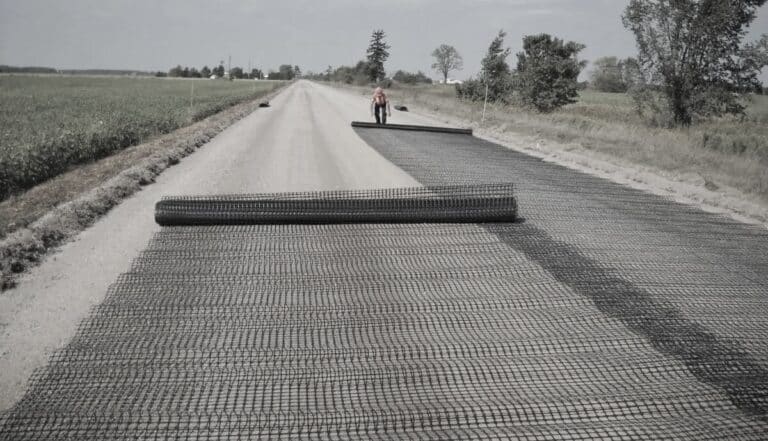
Geo textiles are integral components in road construction, fulfilling essential functions that enhance road performance and longevity. These engineered fabrics are strategically placed within road structures to achieve various goals. They act as separation layers between the road base and subgrade soil, preventing mixing and preserving structural integrity. Geo textiles reinforce weak soils, distributing loads uniformly to reduce settlement and the need for extensive soil replacement. By facilitating efficient drainage and filtration, they prevent water accumulation and soil erosion, crucial for maintaining road stability. Geo textiles are also employed in pavement overlay projects to control reflective cracking, prolonging the life of new surfaces. Their installation as working platforms during construction over soft soils prevents equipment sinking and delays. Ultimately, geo textiles not only ensure safer, more resilient roads but also contribute to sustainable construction practices by minimizing environmental impact and reducing maintenance needs.

hydraulic engineering

In hydraulic engineering, geo textiles serve as indispensable tools for managing water-related challenges and enhancing infrastructure resilience. These versatile textiles find application in various contexts to optimize water flow, prevent erosion, and protect sensitive areas. Geo textiles are deployed along shorelines and riverbanks to combat soil erosion caused by water currents. Acting as protective barriers, they resist erosive forces while allowing proper drainage. Geo textile tubes are employed in coastal protection and land reclamation projects, effectively containing sediments and stabilizing shorelines.

Additionally, geo textiles play a crucial role in filtration systems for drainage applications. Placed beneath gravel or stone layers, they prevent soil particles from clogging drainage systems while permitting water to pass through. This improves water management and reduces the risk of structural damage due to water accumulation.

In hydraulic structures like dams and levees, geo textiles reinforce weak soil layers, enhancing structural stability. Geo textile composites are used to address complex hydraulic challenges, combining the benefits of geo textiles with other materials like geomembranes or geogrids.

When is a nonwoven geotextile used?

Needlepunched and thermally bonded nonwovens do the separation, filtration and drainage work: they keep soil layers apart while letting water through. Pore size distribution and permittivity decide whether the fabric filters or blinds, and thickness carries the protection function under a geomembrane. More in Nonwoven Fabrics.

When is a woven geotextile the better choice?

Wovens and geogrids carry tensile load, so they are used for reinforcement under embankments, roads and retaining structures where the soil itself cannot take the tension. Strength at low strain and long term creep behaviour matter more than short term breaking load. More in Woven Fabrics and Knitted Fabrics.

Which polymers are used in geotextiles?

Polypropylene dominates on cost and chemical resistance, polyester carries high strength reinforcement with better creep behaviour, and polyethylene and PVC carry the membrane side. UV exposure during installation is the main risk, which is why covering time is specified. More in Fibers and Yarns.

How is geotextile durability tested?

Design life is measured in decades, so testing covers creep, oxidation, hydrolysis, UV exposure and installation damage rather than only tensile strength. Reduction factors from those tests are what turn a laboratory value into a design value. More in Technology and Processes.

How do I find suppliers active in this market?

Use the Manufacturers Directory A-Z, or open a supplier profile from the field experts listed on this page. Partner profiles carry direct contact details; other listings link to the company website.

Can I ask a technical question before I buy?

Yes. Ask the Expert puts your question to a field expert active in Geo Textiles. The answer comes back to you by e-mail; when we publish it, other readers benefit too.

Want to be the expert readers ask?

Field experts get a byline, a company profile and direct questions from readers. Partner packages add product visibility and a place in the Weekly E-Update.

Become an expert