
Technology Zone
Composites
Composite textiles combine two or more fibres or materials so the result outperforms each part on its own. This zone covers reinforcement fabrics, prepregs, resins and the moulding and curing processes that shape them.
All articles in this zone
Composites — page 1 of 1

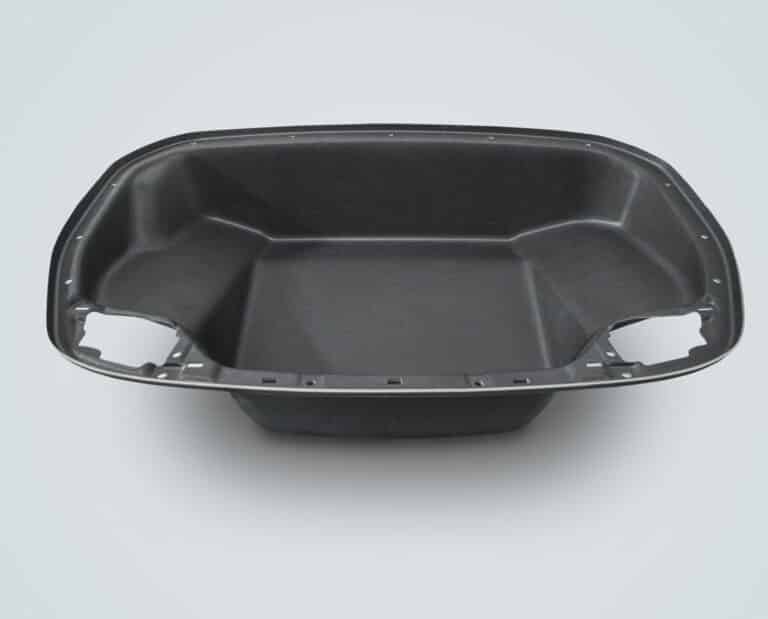
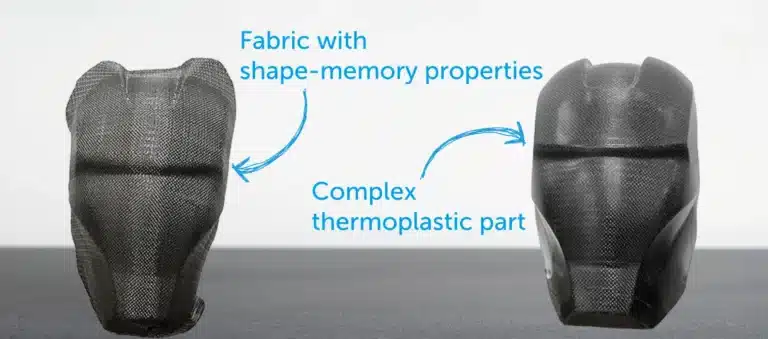

What this zone covers
Composites: how it works, key numbers and troubleshooting
Fundamentals
Fibre and matrix do different jobs
In a composite the fibre carries the load and the matrix holds the fibres in place, transfers load between them and protects them from the environment. That division explains most of the behaviour: strength and stiffness follow the fibre and its direction, while temperature limit, chemical resistance, impact behaviour and processing route follow the matrix. Choosing one without the other is how composites disappoint.
The reinforcements
Glass is the workhorse: cheap, strong, heavy, and electrically insulating. Carbon is three times stiffer for half the density and costs many times more, and it is conductive, which matters for galvanic corrosion against aluminium. Aramid absorbs impact and resists abrasion but is weak in compression. Natural fibres such as flax offer damping and a lower footprint at lower and more variable properties. Most real parts use more than one.
Textile architecture
How the fibre is presented decides how the part behaves. Unidirectional tape gives maximum properties along one axis; woven fabric balances two and drapes reasonably; non-crimp fabric stitches straight layers together and avoids the strength loss that weaving crimp causes; braids and 3D woven preforms carry load around corners and through the thickness. Delamination is the classic composite failure, and through-thickness reinforcement is the classic answer.
Thermoset or thermoplastic matrix
Thermoset resins, epoxy, polyester, vinyl ester, cure irreversibly and give excellent fibre wet-out, high performance and long cycle times. Thermoplastic matrices, polypropylene, PA, PEEK, melt and re-melt, which allows short cycles, welding and genuine recycling at a higher processing temperature and a harder impregnation problem. Automotive volume has been pushing steadily towards thermoplastics for exactly those reasons.
Making the part
Hand layup and vacuum bagging suit small numbers and large parts. Resin transfer moulding and infusion push resin through a dry preform in a closed tool and give consistency and low emissions. Pultrusion makes constant profiles continuously. Filament winding makes pressure vessels and pipe. Automated fibre placement builds aerospace structures ply by ply. The process sets the fibre volume fraction, and fibre volume fraction sets the properties.
Key parameters
| Parameter | Typical range | Rule of thumb |
|---|---|---|
| Fibre volume fraction | Hand layup 35 to 45 %, infusion 50 to 60 %, prepreg 55 to 65 % | Properties scale almost linearly with it; process choice is a properties choice |
| Tensile modulus | E-glass 72 GPa, standard carbon 230 GPa, high modulus carbon 400 GPa | Compare the laminate, not the fibre; layup decides what you actually get |
| Density | Glass 2.55, carbon 1.75, aramid 1.44 g/cm3 | Specific strength is the reason composites exist; always divide by density |
| Cure temperature and time | Room temperature epoxy 24 h, 120 degrees 1 to 2 h, 180 degrees prepreg 2 h | Post-cure raises the glass transition temperature; skipping it caps the service temperature |
| Glass transition temperature | Polyester 70 to 90, epoxy 120 to 200 degrees | Design service temperature at least 20 to 30 degrees below Tg |
| Void content | Under 2 % structural, under 1 % aerospace | Voids hit compression and fatigue hardest, and they are invisible from outside |
| Cure shrinkage | Polyester 5 to 8 %, epoxy 1 to 3 % | Shrinkage drives print-through and warping on thin skins |
| Barcol or degree of cure | Check against the resin datasheet before demoulding | An under-cured part passes inspection and fails in service |
Troubleshooting
| Symptom | Likely causes | What to do |
|---|---|---|
| Delamination between plies | Contamination, insufficient consolidation, voids at the interface, or an impact event | Check the release agent and handling discipline, raise the consolidation pressure, and scan with ultrasound before accepting the part |
| Dry spots after infusion | Flow front racing along a channel, insufficient vacuum, or resin gelling before it arrives | Re-plan the flow with a trial on glass, check for leaks, and use a resin with a longer pot life or a lower tool temperature |
| Part warps after demoulding | Unbalanced or asymmetric layup, cure shrinkage, or uneven tool temperature | Make the laminate symmetric about its midplane, map the tool temperature and adjust the cure ramp |
| Surface shows fibre print-through | Cure shrinkage against a coarse fabric, a gelcoat too thin, or exotherm too fast | Add a surfacing veil, slow the exotherm, and thicken the gelcoat within the supplier limits |
| Bonded joint fails at the interface | Release agent transfer, a peel ply left with silicone, or the surface not abraded | Use a nylon peel ply, abrade and clean immediately before bonding, and validate with a wedge test |
| Properties below the calculation | Fibre volume fraction lower than assumed, misaligned plies, or voids | Do a burn-off or acid digestion for the real fibre content, and check the ply orientations against the laminate schedule |
| Corrosion where a carbon part meets aluminium | Galvanic couple; carbon is noble and aluminium is not | Insulate with a glass ply or an adhesive layer at the interface and seal against moisture |
Go deeper: composites news and case studies · frequently asked questions
6 material types in the Material Guide
Material Guide
Recommended manufacturers
 SGL Carbon SE
German technology group producing carbon-based solutions: specialty and fine-grain graphite, flexible graphite, carbon and silicon-carbide components, plus carbon fibres, textile reinforcements, prepregs and composite parts. Markets include semiconductors, automotive, aerospace, energy storage, wind energy and chemical process industries.
SGL Carbon SE
German technology group producing carbon-based solutions: specialty and fine-grain graphite, flexible graphite, carbon and silicon-carbide components, plus carbon fibres, textile reinforcements, prepregs and composite parts. Markets include semiconductors, automotive, aerospace, energy storage, wind energy and chemical process industries.
 Gurit Holding AG
Manufacturer and supplier of advanced composite materials. Portfolio includes structural core materials (PET/Kerdyn, Corecell, Balsaflex, PVC), prepregs, epoxy resins and adhesives and glass pultruded profiles, alongside composite engineering, tooling, kitting and manufacturing solutions. Serves wind energy, marine and industrial markets from 27 sites with around 1,900 employees.
Gurit Holding AG
Manufacturer and supplier of advanced composite materials. Portfolio includes structural core materials (PET/Kerdyn, Corecell, Balsaflex, PVC), prepregs, epoxy resins and adhesives and glass pultruded profiles, alongside composite engineering, tooling, kitting and manufacturing solutions. Serves wind energy, marine and industrial markets from 27 sites with around 1,900 employees.
 Owens Corning
US building and materials manufacturer headquartered in Toledo, Ohio, with businesses in roofing, insulation and doors. Its composites activity supplies glass fibre reinforcement products for composite applications. Note: after the 2025-2026 reshaping the glass reinforcements business is no longer presented as a core reporting segment.
Owens Corning
US building and materials manufacturer headquartered in Toledo, Ohio, with businesses in roofing, insulation and doors. Its composites activity supplies glass fibre reinforcement products for composite applications. Note: after the 2025-2026 reshaping the glass reinforcements business is no longer presented as a core reporting segment.
 Teijin Carbon Europe GmbH
One of the world's leading manufacturers of high-performance carbon fibre, marketed under the Tenax brand. Portfolio covers filament yarns, chopped and milled short fibres, dry reinforcements (woven fabrics, non-crimp fabrics, braids), thermoplastic tapes and laminates, thermoset prepregs and towpregs, plus the oxidised Pyromex fibre.
Teijin Carbon Europe GmbH
One of the world's leading manufacturers of high-performance carbon fibre, marketed under the Tenax brand. Portfolio covers filament yarns, chopped and milled short fibres, dry reinforcements (woven fabrics, non-crimp fabrics, braids), thermoplastic tapes and laminates, thermoset prepregs and towpregs, plus the oxidised Pyromex fibre.
 Toray Advanced Composites
Develops and manufactures high-performance thermoset and thermoplastic prepregs, bulk molding compounds and composite tooling materials for aerospace, space, defense, automotive, industrial and consumer applications. Part of the Toray Group, with plants in the Netherlands, the UK and the United States.
Toray Advanced Composites
Develops and manufactures high-performance thermoset and thermoplastic prepregs, bulk molding compounds and composite tooling materials for aerospace, space, defense, automotive, industrial and consumer applications. Part of the Toray Group, with plants in the Netherlands, the UK and the United States.
 SAERTEX GmbH & Co. KG
Develops and produces textile reinforcement materials for fibre composites, mainly multiaxial and unidirectional non-crimp fabrics from glass, carbon, aramid and natural fibres, plus core materials and cut kits. Materials are used for lightweight components in wind energy, aerospace, automotive, boatbuilding and industry, with production and kit-cutting sites worldwide.
SAERTEX GmbH & Co. KG
Develops and produces textile reinforcement materials for fibre composites, mainly multiaxial and unidirectional non-crimp fabrics from glass, carbon, aramid and natural fibres, plus core materials and cut kits. Materials are used for lightweight components in wind energy, aerospace, automotive, boatbuilding and industry, with production and kit-cutting sites worldwide.
Ask the Expert
Ask a composites expert — free
Engineers and product specialists who answer technical questions from readers. The answer comes back to you by e-mail; when we publish it, other readers benefit too.
No field expert for this zone yet — your question still reaches our editors.
E-Product & Market Insights
Composites, in depth in your inbox
Every E-Product and Market Insight edition takes one technology or one market in depth. These are the editions on this zone, so read them online or get the next one by e-mail.
Subscribe to our E-newsletters
Join 7,000+ product developers, technologists and technical buyers. Free, and you pick the editions.
"*" indicates required fields
What this zone covers
Frequently asked about composites
Glass or carbon?
Glass unless the stiffness or the weight forces the change. Carbon is roughly three times stiffer for two thirds of the density, and many times the price, so it earns its place when weight is genuinely expensive: aerospace, motorsport, moving parts and pressure vessels. Carbon also conducts, which means galvanic corrosion against aluminium and a different lightning strike strategy.
Thermoset or thermoplastic matrix?
Thermoset for the highest performance and the easiest impregnation, at long cycle times and no recycling route. Thermoplastic for short cycles, welding, higher toughness and a genuine end of life, at a much higher processing temperature and a harder problem getting the melt into the fibre bed. Volume production has been moving towards thermoplastics for a decade and continues to.
What is fibre volume fraction and why does it matter?
It is the proportion of the laminate that is fibre rather than resin, and the properties follow it almost linearly. Hand layup gives 35 to 45 percent, infusion 50 to 60, prepreg with autoclave 55 to 65. Choosing a process is therefore choosing a properties band before any design work happens, which is why quoted material data always has to be read together with the process.
Why is delamination the failure that matters?
Because a laminate is strong in the fibre directions and weak through the thickness, where only the matrix carries load. An impact that leaves a barely visible mark on the surface can separate plies internally and remove a large part of the compression strength. That is the reason for barely visible impact damage rules, for ultrasonic inspection, and for stitching, tufting and 3D preforms.
How do I get a bonded joint to hold?
Treat the surface as the product. Use a nylon peel ply rather than a coated one, abrade and clean immediately before bonding, and never let silicone near the shop. Validate with a wedge or floating roller peel test rather than a lap shear, because lap shear flatters a bad surface. Most bond failures are adhesion failures at a surface nobody prepared.
Can composites be recycled?
Thermoplastic composites can be re-melted and reformed, with some loss of fibre length. Thermoset composites cannot be melted, so the routes are mechanical grinding into filler, pyrolysis to recover the fibre, or solvolysis. Recovered carbon fibre has a real market; recovered glass mostly does not, because virgin glass is too cheap to compete with.
What does post-cure actually buy?
Glass transition temperature, and with it the usable service temperature. A part cured at room temperature reaches only part of its potential crosslink density, so it passes a hardness check and then softens in the first hot summer. If the datasheet specifies a post-cure, the properties quoted next to it assume that post-cure happened.
What is the difference between this Technology Zone and the Equipment Guide?
The zone is the editorial side: news, case studies, videos, newsletter editions and field experts. The Equipment Guide is the directory side: equipment types and the manufacturers that build them. This page links to its Equipment Guide category and back.
How do I find a manufacturer of composites equipment?
Open the Equipment Guide category for this zone, pick an equipment type and open a manufacturer profile. Partner profiles carry direct contact details; other listings link to the company website.
Can I ask a technical question before I buy?
Yes. Ask the Expert puts your question to a field expert in this zone. The answer comes back to you by e-mail; when we publish it, other readers benefit too.