
Technology Zone
Technology and Processes
Textile technology and processes turn raw fibre into finished fabric. This zone covers spinning, weaving and knitting, dyeing, printing and finishing, and the machinery, automation and quality control around them.
All articles in this zone
Technology and Processes — page 1 of 1

Promoted videos
Technology and Processes in action
What this zone covers
Technology and Processes: how it works, key numbers and troubleshooting
Fundamentals
Preparation comes before everything
Nothing in the wet processing chain works on a fabric that has not been prepared. Singeing removes surface hairs, desizing takes off the size that protected the warp during weaving, scouring removes waxes, oils and spin finishes, and bleaching gives an even white base. Skip or rush any of them and the dyeing that follows will be uneven, and no correction downstream will fix it.
Dyeing: where and when
Colour can be added at almost any stage. Dope dyeing puts pigment in the polymer melt and gives unbeatable fastness with no separate dyeing step. Fibre and yarn dyeing suit melange effects and long runs. Piece dyeing is the flexible middle. Garment dyeing gives the shortest lead time and the highest risk. The later the colour is added, the more flexible the supply chain and the worse the fastness and the water use tend to be.
Exhaust and continuous
An exhaust process puts the fabric in a bath and lets the dye migrate over time, which suits small lots and delicate goods and uses a lot of water. A continuous process pads the fabric through a trough and fixes it in line, which uses far less water per kilogram and only pays off over long runs. Liquor ratio is the number that separates them, and it drives water, energy and effluent alike.
Printing
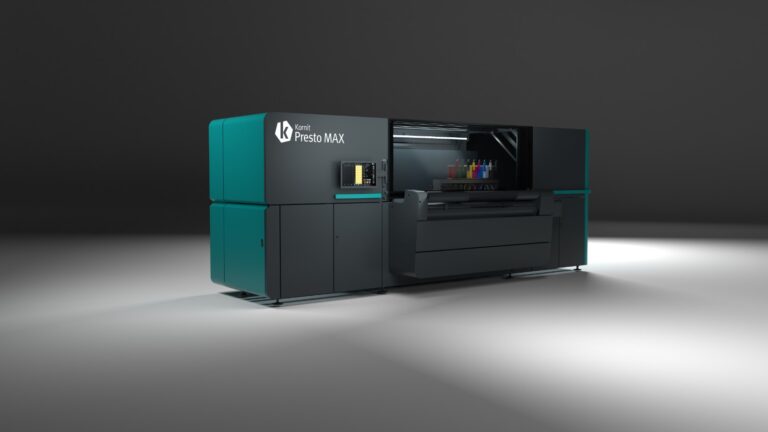
Rotary screen printing dominates long runs on price. Digital inkjet has taken over short runs, sampling and anything with photographic content, with no screens, no minimum and far less water, at a higher cost per metre and a slower speed. Both need the right pre-treatment for the ink chemistry, and most digital printing complaints turn out to be pre-treatment complaints.
Finishing sets the final properties
Mechanical finishing, calendering, raising, sanforising, compacting, changes the surface and the dimensions. Chemical finishing adds function: water repellency, flame retardance, antimicrobial, easy care, softeners. Heat setting stabilises synthetics so they stop shrinking later. This is where a fabric acquires most of what a specification asks for, and where most of the durability questions are answered.
Key parameters
| Parameter | Typical range | Rule of thumb |
|---|---|---|
| Liquor ratio | Exhaust 1:5 to 1:15, continuous under 1:1 | Water, energy and effluent all scale with it; low ratio machines pay back |
| Dyeing temperature | Reactive on cotton 40 to 80, disperse on polyester 130 degrees | Polyester needs pressure above 100 degrees or a carrier |
| pH control | Reactive dyeing 10.5 to 11.5, disperse 4.5 to 5.5 | pH drift during the cycle is the most common cause of shade variation |
| Heat setting | Polyester 180 to 200 degrees, polyamide 190 to 200 | Set above any temperature the fabric will see later, or it shrinks in the field |
| Stenter overfeed | 2 to 10 % to control length shrinkage | Width and overfeed together set the finished dimensions; record both |
| Pick-up in padding | 60 to 80 % for cotton, 30 to 50 % for polyester | Wet pick-up decides how much chemistry actually lands on the fabric |
| Colour difference | dE under 1.0 for a commercial match | Agree the illuminant and the standard before the first lot, not after |
| Digital print speed | 5 to 100 m2/h per machine class | Compare on cost per metre including pre-treatment and steaming, not on speed |
Troubleshooting
| Symptom | Likely causes | What to do |
|---|---|---|
| Shade varies between lots | pH drift, liquor ratio different from the recipe, or substrate variation from spinning | Log pH and temperature through the cycle, keep the liquor ratio fixed, and check the greige lot before reblending the recipe |
| Streaks and crease marks after dyeing | Rope movement in a jet machine, fabric too tightly loaded, or insufficient wetting | Reduce the load, raise the flow rate, and add a wetting agent; delicate qualities may need open width |
| Poor wash fastness | Unfixed dye not washed off, wrong dye class for the fibre, or a fixation step cut short | Extend and improve the soaping, confirm the dye class matches the fibre, and verify the fixation temperature and time |
| Fabric shrinks at the customer | Heat setting below the service temperature, or overfeed set to hit a length target rather than a stable one | Raise the setting temperature, set the overfeed for dimensional stability, and confirm with a washed test piece |
| Digital print looks blurred or dull | Pre-treatment uneven or missing, wrong ink for the fibre, or steaming too short | Measure the pre-treatment pick-up across the width, match ink chemistry to fibre, and verify the steamer conditions |
| Water repellent finish fails early | Insufficient cure, surfactant contamination, or mechanical abrasion in service | Check the cure temperature at the fabric, avoid softener carry-over, and specify a durability test after abrasion and washing |
| Effluent load out of specification | High liquor ratio, salt in reactive dyeing, or poor recipe control | Move to low liquor machines, review dye selection and fixation rate, and reuse rinse water where the process allows |
Go deeper: news and case studies · frequently asked questions
Equipment Guide
Technology and Processes in the Equipment Guide
9 equipment types
Recommended manufacturers
 Rieter AG
World-leading system supplier for processing natural and man-made fibres into short-staple and long-staple yarn, also covering filament yarns, synthetic staple fibres and nonwovens. Builds ring, compact, rotor and air-jet spinning systems, fibre preparation, texturing and winding machinery, components and smart spinning mill automation.
Rieter AG
World-leading system supplier for processing natural and man-made fibres into short-staple and long-staple yarn, also covering filament yarns, synthetic staple fibres and nonwovens. Builds ring, compact, rotor and air-jet spinning systems, fibre preparation, texturing and winding machinery, components and smart spinning mill automation.
 Lindauer DORNIER GmbH
German family-owned machinery builder on Lake Constance. Manufactures air-jet and rapier weaving machines for apparel fabrics and technical textiles (filtration, airbags, carbon and 3D woven composites), plus systems for composite production. Its second core business is film stretching lines for biaxially oriented plastic films.
Lindauer DORNIER GmbH
German family-owned machinery builder on Lake Constance. Manufactures air-jet and rapier weaving machines for apparel fabrics and technical textiles (filtration, airbags, carbon and 3D woven composites), plus systems for composite production. Its second core business is film stretching lines for biaxially oriented plastic films.
 KARL MAYER Technische Textilien GmbH
German family-owned textile machinery builder founded in 1937, organised in three business units: Warp Knitting, Warp Preparation and Technical Textiles. The Technische Textilien unit (Chemnitz and Selbitz) builds machines for technical textiles, including multiaxial and composite reinforcement machines and weft insertion machines.
KARL MAYER Technische Textilien GmbH
German family-owned textile machinery builder founded in 1937, organised in three business units: Warp Knitting, Warp Preparation and Technical Textiles. The Technische Textilien unit (Chemnitz and Selbitz) builds machines for technical textiles, including multiaxial and composite reinforcement machines and weft insertion machines.
Ask the Expert
Ask a technology and processes expert — free
Engineers and product specialists who answer technical questions from readers. The answer comes back to you by e-mail; when we publish it, other readers benefit too.
Subscribe to our E-newsletters
"*" indicates required fields
Questions and answers
Frequently asked about technology and processes
Where in the chain should colour be added?
As early as the supply chain can tolerate. Dope dyeing gives the best fastness and the lowest water use because the pigment is in the polymer, but it commits the colour before anything is made. Piece dyeing is the practical middle ground. Garment dyeing gives the shortest lead time and the fastest response to demand, at the highest risk and the worst fastness. It is a supply chain decision more than a technical one.
Why is polyester dyed at 130 degrees?
Because the fibre is crystalline and closed at lower temperatures. Disperse dye needs the polymer chains mobile enough to let it in, which happens well above the glass transition point, so the bath runs under pressure at about 130 degrees. The alternative is a carrier chemical at atmospheric pressure, which works but brings odour, effluent and cost problems.
Rotary screen or digital printing?
Rotary screen for long runs of a stable design, where the cost per metre is unbeatable once the screens are engraved. Digital for short runs, sampling, photographic imagery and anything where the design changes often, with no screens, no minimum order and much lower water use. Many mills run both and decide per order on the break-even length.
How do I keep shade consistent between lots?
Control what the recipe assumes: pH through the whole cycle, liquor ratio, temperature ramp and the substrate itself. Most shade complaints trace back to a greige variation or a pH drift rather than to the dye. Agree dE limits, the illuminant and the physical standard before the first bulk lot, and keep a retained sample of every lot.
What does heat setting actually do?
It relaxes the internal stresses in a synthetic fibre at a temperature above anything the fabric will meet again, so the dimensions stop moving. Set too low and the fabric shrinks later, in finishing, in the dyehouse or at the customer. Set too high and the handle hardens and the dye uptake changes. It is the quiet step that decides whether a fabric behaves.
How do I reduce water use in wet processing?
Start with liquor ratio, because water, energy, chemicals and effluent all scale with it: modern low ratio machines run at 1:5 or better where old ones ran at 1:15. After that, reuse rinse water, move suitable articles to continuous or foam application, and consider digital printing, which uses a fraction of the water of screen printing. Dope dyeing removes the step altogether.
Are durable water repellents still a problem?
The chemistry has changed and continues to. Long chain fluorocarbons are effectively gone from the market, and the replacements, short chain fluorocarbons and fluorine-free hydrocarbon or silicone chemistries, differ in how they handle oil rather than water. Specify what the finish has to repel and test after washing and abrasion, because that is where the fluorine-free versions differ most.
What is the difference between this Technology Zone and the Equipment Guide?
The zone is the editorial side: news, case studies, videos, newsletter editions and field experts. The Equipment Guide is the directory side: equipment types and the manufacturers that build them. This page links to its Equipment Guide category and back.
How do I find a manufacturer of technology and processes equipment?
Open the Equipment Guide category for this zone, pick an equipment type and open a manufacturer profile. Partner profiles carry direct contact details; other listings link to the company website.
Can I ask a technical question before I buy?
Yes. Ask the Expert puts your question to a field expert in this zone. The answer comes back to you by e-mail; when we publish it, other readers benefit too.